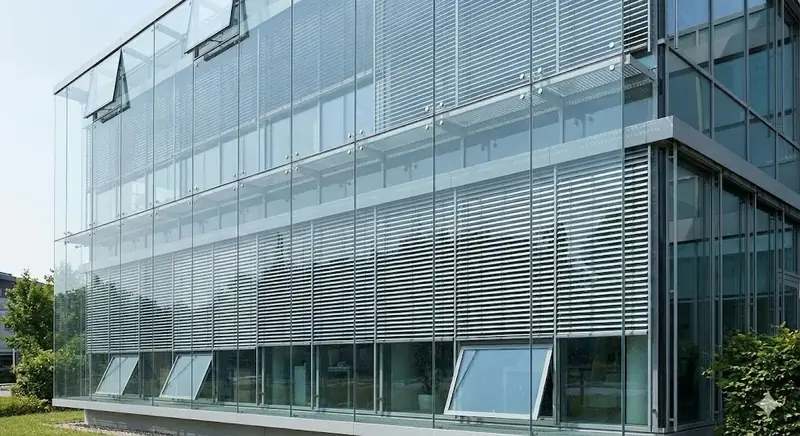
Double Glazed Units (DGU) vs Triple Glazing: U-Values, SHGC & Acoustic Specs for Indian Facades

Thermal Dynamics of Facade Glazing in Tropical Climates
In India's predominantly cooling-driven climate, an unprotected single-pane glass facade acts as a greenhouse, inflating corporate HVAC power bills by up to 40%. Double Glazed Units (DGU) — and increasingly triple glazed units in high-ambient noise or severe weather zones — provide the thermal and acoustic envelope required by modern ECBC (Energy Conservation Building Code) and LEED Platinum benchmarks.
Technical Performance Matrix: Single vs DGU vs Triple Glazing
Performance comparison across thermal insulation, solar radiation, and acoustic cutoffs:
Understanding Soft-Coat Low-E on Surface #2
For tropical Indian conditions, solar control soft-coat Low-E must be deposited on Surface #2 (the inner face of the outer glass pane). This reflects incoming shortwave infrared solar rays back into the atmosphere before heat can enter the 12mm/16mm argon gas cavity.
Acoustic Insulation for Urban Metro Corridors
Commercial towers situated along heavy traffic arteries or metro corridors require acoustic attenuation exceeding 40 dB. Combining acoustic PVB laminates on the outer pane with an asymmetrical inner pane (e.g., 8.76mm acoustic lam + 16A + 6mm toughened) cancels resonant sound frequencies, creating whisper-quiet corporate work environments.
Explore More Facade Solutions
Browse our premium facade, glazing and aluminium cladding solutions Pan India.