Frameless Glass Railings for High-Rise Balconies: Base Shoe vs Spigot Systems & IS 875 Load Norms
Balcony Safety & Architectural Elegance in High-Rise Living
Frameless glass railings have become a signature luxury feature for high-rise residential towers, penthouses, and rooftop restaurant decks across Mumbai, Bengaluru, Delhi NCR, and Pune. However, at heights of 10 to 40 storeys, glass balustrades serve as primary life-safety barriers that must resist violent wind gusts and crowded human impact loads without deflecting or shattering.
Base Shoe vs Spigot Fittings: Which is Safer for High Rises?
Comparing the two dominant mounting systems:
- 1.Continuous Aluminium Base Shoe Channel — Heavy architectural 6063-T6 bottom profile mechanically anchored into concrete floor slabs every 200mm to 300mm using M10/M12 stainless steel chemical anchors. Disperses lateral moments evenly along the entire slab edge. Mandatory for balustrades above 15 meters.
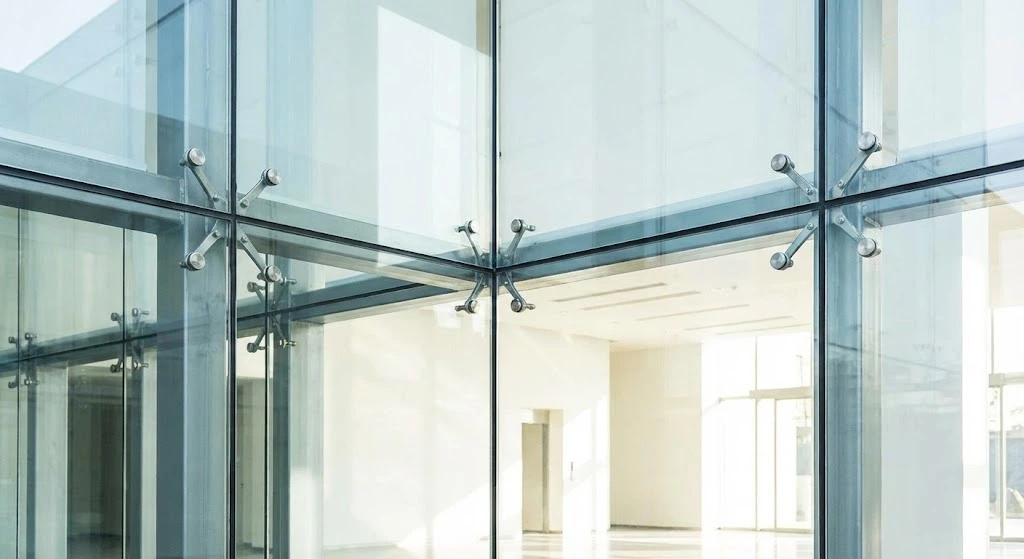
- 2.Stainless Steel Spigots (Mini-Posts) — Clamps the glass at 2 to 3 isolated base points per meter. Excellent for ground-floor swimming pool decks and low-rise villas, but induces localized point-stress concentrations that make it unsuitable for high-altitude balconies.
2026 Pricing Guide per Running Foot (RFT)
Average turnkey rates including glass, hardware, anchors, top handrail, and installation:
Compliance with IS 875 & IS 2553 Standards
Indian standards mandate that glass railings in commercial and high-occupancy residential buildings withstand a minimum horizontal line load of 1.5 kN/m applied at handrail height. Fine Glaze specifies toughened laminated glass (PVB or SentryGlas) for all elevated installations, ensuring that even in the rare event of a break, the interlayer keeps the pane upright and intact.
Explore More Facade Solutions
Browse our premium facade, glazing and aluminium cladding solutions Pan India.